What a Cleaning and Checkup Is Actually Looking For
A cleaning looks simple from the chair, but there's a lot happening in twenty minutes that isn't just polish.
September 16, 2026 · 4 min read
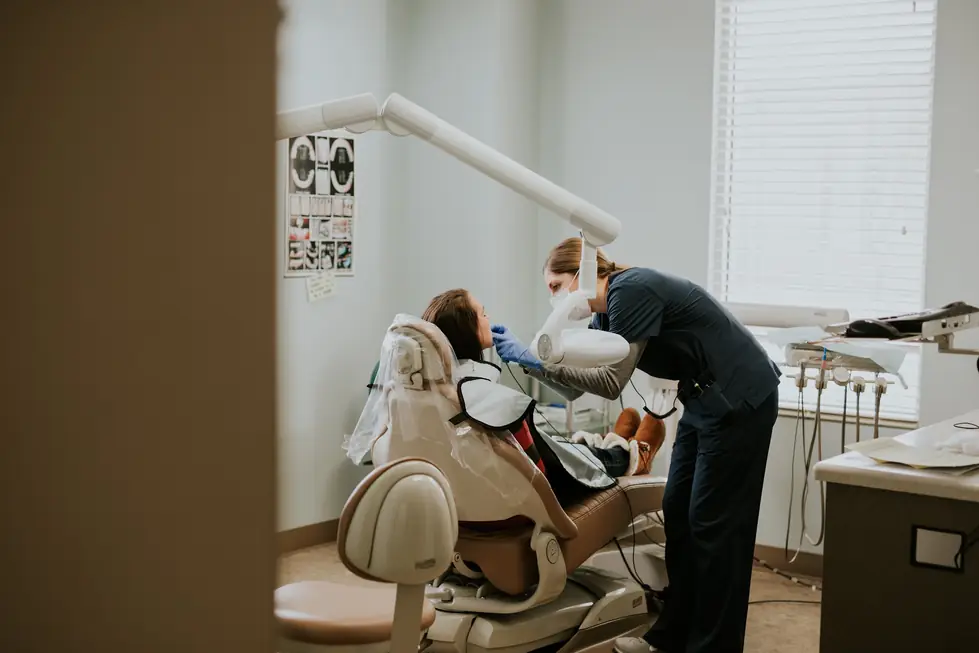
Most people walk in for a cleaning expecting the same thing every time: lie back, listen to the scraping, rinse, done. That part is real, but it's only half of what's happening. A hygienist and dentist working through a routine visit are running a quiet, methodical check on a lot more than plaque.
The cleaning itself
Brushing and flossing get most of the surface of a tooth, but they miss the areas along and just under the gumline where plaque hardens into tartar. Once it hardens, a toothbrush can't touch it. That's what the hand instruments and the ultrasonic scaler are for, working around each tooth to clear tartar a person can't reach on their own. After that comes polishing, which smooths the enamel back down and removes surface staining from coffee, tea, or tobacco.
The part that isn't cleaning at all
While the hygienist works, they're also measuring the gums. Small pockets between tooth and gum are normal, but pockets that are deepening over time are usually the first sign of gum disease, long before a person feels anything wrong. That measurement gets tracked visit to visit, so a change shows up as a trend, not a surprise.
- Gum pocket depth and any bleeding on measurement
- Early signs of tooth decay, especially between teeth where it's hard to see
- Wear patterns that can point to grinding or clenching
- Old fillings or crowns for cracks or a loosening seal
- Soft tissue in the mouth, lips, and tongue
Why the exam matters as much as the polish
A dentist doing the exam is looking past the teeth themselves. Soft tissue gets checked visually for anything that looks out of the ordinary, because catching something early is almost always simpler to deal with than catching it late. X-rays, taken on a regular schedule rather than every visit, show what's happening between teeth and under the gumline that a visual exam alone can't reach, including early decay and the condition of bone around the teeth.
Why the six-month rhythm exists
Tartar takes roughly that long to build back up to a point where a toothbrush can no longer manage it, and gum disease in its early stage, gingivitis, is reversible with regular cleanings and decent home care. Left alone, it can progress into something that isn't reversible. The interval isn't arbitrary. It's built around how quickly the mouth changes between visits, and it holds up whether someone's brushing habits are excellent or a little inconsistent, because plaque and tartar don't wait for a person to catch up on flossing before they start forming again.
What happens if something does turn up
Finding something during a routine visit isn't unusual, and it isn't automatically a bigger appointment. A small area of early decay is often just a filling, scheduled for another day rather than tackled on the spot. Gum disease caught while it's still gingivitis can often be managed with a more frequent cleaning schedule and some changes at home, without anything more involved than that. The whole point of the regular exam is catching these things while they're still that simple. Defiance Dental Group treats fillings, gum disease, and the rest of what a routine exam turns up, so a finding at a checkup isn't a separate errand somewhere else.
What to expect if it's been a while
Coming back after a longer gap, whether that's a year or several, doesn't mean starting over from scratch. A first visit back usually takes a little longer, mostly because there's more tartar to clear and more ground to cover on the exam side, and a set of X-rays is more likely if it's been a while since the last set. Beyond that, it's the same appointment described above. Nobody needs a perfect flossing routine walking in the door for it to be worth scheduling.
What a person can actually do between visits
None of what happens in the chair replaces daily brushing and flossing, and none of it is meant to. A cleaning removes what's already hardened into tartar, but it doesn't undo six months of skipped flossing overnight, and it isn't designed to. Brushing twice a day, flossing once, and cutting back on constant snacking between meals are still the things that determine how much work there is to do at the next visit. A cleaning is a reset, not a substitute for the routine in between.
If it's been longer than six months, or something has felt off since your last visit, a normal cleaning and checkup is still the right place to start. Defiance Dental Group can be reached at (419) 782-7950 to get on the schedule.
Defiance Dental Group, (419) 782-7950
Call (419) 782-7950More articles
What Happens When a Tooth Cracks or Suddenly Starts Aching
A bad ache or a crack that happened an hour ago and one that's been ignored for two weeks get treated very differently.
Root Canal Therapy, Without the Folklore
The reputation root canals have is mostly about the infection that led to needing one, not the treatment itself.